Netravati Trek:
The Complete Guide (2026)
Netravati Trek is a 12–14 km round-trip trail inside Kudremukh National Park, Chikmagalur, that has quietly become one of the most searched-for weekend treks near Bangalore — and one of the hardest to get a permit for.
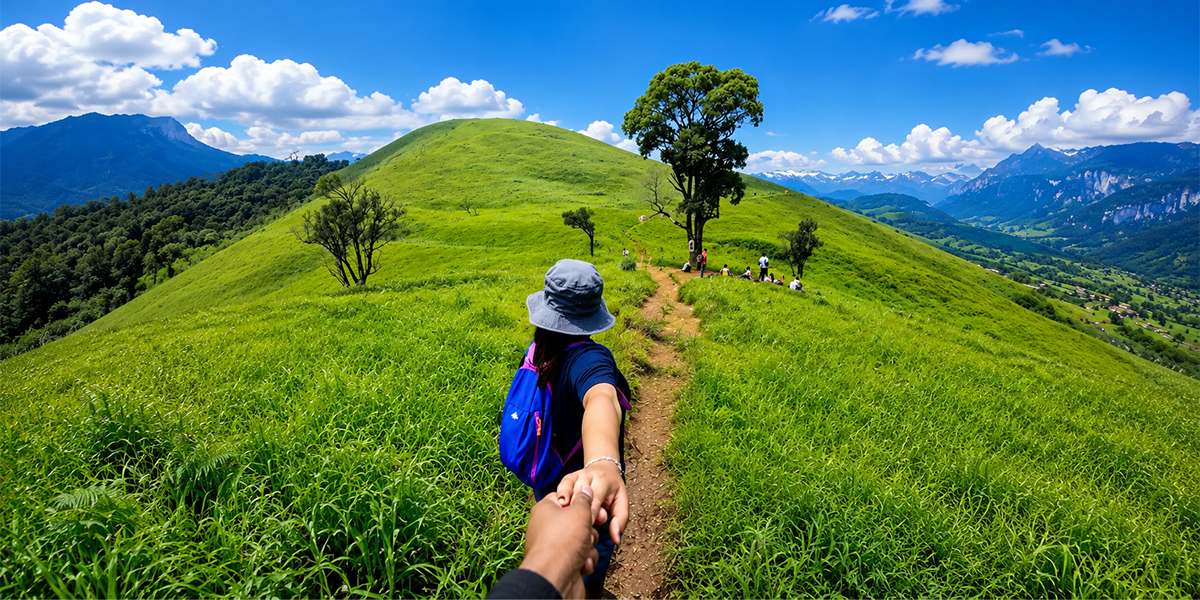
Unlike most Western Ghats trails where the reward sits only at the summit, Netravati keeps unrolling grassland views, shola forest, and a shifting cloud show for almost the entire route, which is why trekkers increasingly rank it above its bigger neighbour, Kudremukh Peak.
This guide covers everything the top search results leave out or leave outdated: the 2026 permit overhaul, a real cost comparison between doing it yourself and booking a group trek, a side-by-side with Kudremukh, and the safety details you actually need on a remote forest trail with patchy network coverage.
At a Glance: Key Trail Metrics
Location
Samse, Kalasa, Karnataka
Peak Altitude
~1,520 m (4,987 ft)
Duration
5–7 Hours on Trail
Trip Length
2 Days / 1 Night
| Extended Trail Specifications | |
|---|---|
| Falls under | Kudremukh National Park (Kudremukh Wildlife Division) |
| Distance from Bangalore | ~310–330 km (7–8 hours by road) |
| Permit authority | Karnataka Forest Department via the Aranya Vihaara portal |
| Mandatory Guide | Yes (1 guide per 10 trekkers, as of 2026 SOP) |
| Nearest Points | Kalasa Town (~14 km) | Hassan Railway | Mangalore Airport (~86 km) |
Where Netravati Trek Gets Its Name
The trek is named after the Netravathi River, which is born in the Bangrabalige valley near Yelaneeru Ghat, right at the base of this peak. From here it flows down through Dakshina Kannada, passes the pilgrimage town of Dharmasthala, and eventually meets the Arabian Sea near Mangalore.
Locally, the river's origin is tied to the Varaha avatar of Vishnu — the ground is said to have wept in relief after being lifted from a flood, and those tears became the river's source. Trekking to the peak means walking through the actual watershed of a river considered sacred across coastal Karnataka, which gives the trek a cultural weight most write-ups skip past.
Netravati Trek vs Kudremukh Trek: Which Should You Pick?
Both trails sit inside the same national park and share a trailhead region, so this is the most common comparison trekkers search for before booking.
| Feature | Netravati Trek | Kudremukh Trek |
|---|---|---|
| Distance | 12–14 km round trip | ~20–22 km round trip |
| Altitude | ~1,520 m | 1,894 m (3rd highest in Karnataka) |
| Difficulty | Easy–moderate | Moderate–difficult |
| Duration | Single long day (2D/1N trip) | Full day of intense trekking |
| Crowds | Lower daily cap, feels quieter | More visited, busy on weekends |
| Visuals | Grassland views from early on | Views build gradually to peak |
| Best suited for | First-timers, fit beginners | Trekkers with stamina/prior experience |
If you're unsure which to pick: Netravati is the better starting point, and many trekkers treat it as a warm-up before attempting Kudremukh later in the season.
2026 Permit Rules — What's Changed
This is the part every other Netravati trek page online is currently missing or has outdated. Karnataka Forest Department rules changed significantly in 2026, and they affect how — and whether — you can trek Netravati on your chosen date.
Critical 2026 SOP and Booking Rules
- All bookings go through Aranya Vihaara: portal access only (aranyavihaara.karnataka.gov.in). Spot/offline permits are no longer issued.
- Mandatory certified nature guide: Required at a ratio of 1 guide per 10 trekkers. You cannot start without one.
- Strict daily trekker caps: Weekend slots often sell out within minutes of the midnight release window.
- 15-day booking window: Opens exactly at midnight 15 days before the trek date. The portal itself only accepts transaction queries between 10 AM and 5 PM daily.
- Zero-refund policy: Once booked, permits cannot be rescheduled, modified, or cancelled. This blocks bulk agency reservations.
- Booking limit: Each verified user ID can book for a maximum of 5 people using valid government IDs.
- Verification: The exact same ID used during booking must be carried and displayed at the checkpost.
- Monsoon safety & closures: The route closes during heavy monsoon windows for ecological recovery; always check Aranya Vihaara's current status before departure. In 2026, it reopened on 24 June.
- Checkpost Cutoff Time: Plan to arrive early. Current operator advice indicates an 11 AM strict cutoff to start the trek.
Best Time to Visit Netravati Trek
Post-monsoon / Winter
Clearest views, dry trails, comfortable 12–22°C temperatures. Unquestionably the best window for photography.
Monsoon
Deep green hills, rushing waterfalls, dramatic cloud movement. Expect muddy, slippery trails and active leeches.
Summer
Hot, dry grassland landscapes with no tree shade. Water sources dry up, making it the least rewarding trekking window.
Trail Guide: The Route Section by Section
The trail is broken into three distinct phases starting from the forest checkpost near Samse.
Checkpost to the Two-Tier Waterfall
A short, steep climb through dense forest canopy that flattens out as you approach a scenic two-tier waterfall—the last reliable freshwater source. The path is well-marked with gradual slopes. During heavy monsoon, the river stones get wet and slippery, requiring cautious foot placement.
Waterfall to the Stream Crossing
The trail skirts alongside an old irrigation canal before turning left toward a freshwater stream. Along this path, look left to catch clear views of Rani Jhari cliff and the Ballalarayana Durga fort ridge. You will cross the stream bed here; in peak monsoon, expect water levels to rise above knee-height.
Stream to the Summit Peak
This is where Netravati shines. The vegetation opens into expansive shola grassland with 360° panoramic views. You'll cross multiple false peaks before arriving at the true summit. On crisp days, Kudremukh Peak stands tall to the right and Rani Jhari to the left, with plains far below.
How to Reach Netravati Trek
By Own Vehicle: Drive to Kalasa via Hassan–Mudigere–Kottigehara, then continue to Samse. From Samse junction, take the left toward the forest checkpost. Roads near the trailhead are often muddy and uneven, especially in monsoon — most trekkers park at their homestay and take a shared jeep the rest of the way rather than risk a private car.
By Public Transport: Overnight KSRTC buses from Bangalore reach Kalasa by early morning. From Kalasa, take a local bus, shared jeep, or auto toward Samse. From Samse, a shared jeep to the trail base typically runs around ₹250–300 per person, depending on group size.
Difficulty & Fitness Requirements
Netravati is classified easy-to-moderate — approachable for fit beginners, but the 12–14 km round trip in a single day (plus 500–600 m of elevation gain concentrated in the final stretch) will test anyone who hasn't put in some prep.
Cost Breakdown: DIY vs Guided Group Trek
Both approaches are highly viable. Here's a realistic view of how your costs stack up under each method:
Doing It Yourself (DIY)
- Forest Permit: ~₹500 (Aranya Vihaara)
- Mandatory Guide: ~₹100 (Shared across 10 people)
- Shared Jeep: ~₹250 - ₹300 (Round trip to base)
- Local Homestay: ₹1,000 - ₹1,500 (Including base meals)
*Excludes transport costs from Bangalore to Samse. Ideal for groups of 4+ who own vehicles.
Guided Group Treks
- Transportation: Round-trip Non-A/C bus or TT from Bangalore
- All Permits & Guides: Fully secured and paid in advance
- Stay & Food: Verified homestay stay, multiple meals, and jeep transfers
- Logistic Handling: No stressful midnight permit bookings
*Best suited for solo travelers, first-timers, or anyone seeking end-to-end convenience.
What to Pack for the Trek
Kudremukh National Park maintains strict environmental rules. Standard plastic wrappers are checked at forest entrance gates and must be brought back out.
Essential Gear
- Trekking shoes with solid grip (Mandatory)
- Single trekking pole
- 1.5–2 litres of water in non-plastic containers
- Raincoat or lightweight travel poncho
- Original ID matching your forest permit
- Personal medication & basic first-aid
Monsoon Additions
- Leech-proof socks or thick salt pouch
- Full change of clothing inside plastic bag
- Extra dry pairs of socks
- Waterproof phone cover
Recommended Comfort
- Wide sun cap & UV sunglasses
- Energy bars, dates, dry fruits
- High-capacity power bank
- Cash (No reliable ATMs past Kalasa)
Local Stays, Food & Wildlife
Where to Stay: Camping on the summit is strictly banned. Most trekkers book homestays around Samse and Kalasa. Popular local options include Bella Homestay (near the forest office) or Kudremukh Adventure Homestay, which typically charge around ₹1,200 per head, meals included.
Food, Water & Connectivity: Samse is your last stop for local meals. On-trail water sources are limited to the waterfall and streams. Cellular networks (Airtel, BSNL, Jio) drop out completely in forest valleys — inform families in advance.
Wildlife Encounters: The Western Ghats high-altitude grasslands are home to Sambar deer, Indian gaurs (bison), and diverse birds. Keep a safe distance and never feed forest animals.
| Emergency & Safety Contacts | |
|---|---|
| Hospitals | Kalasa Govt Hospital | Sri Manjunatha Memorial Hospital (082632 74628) |
| Police Help | Kalasa Police Station (09480805159) |
| Forest Office | Kudremukh Range Forest Officer (08263255998) |
| National Helpline | Dial 112 |